
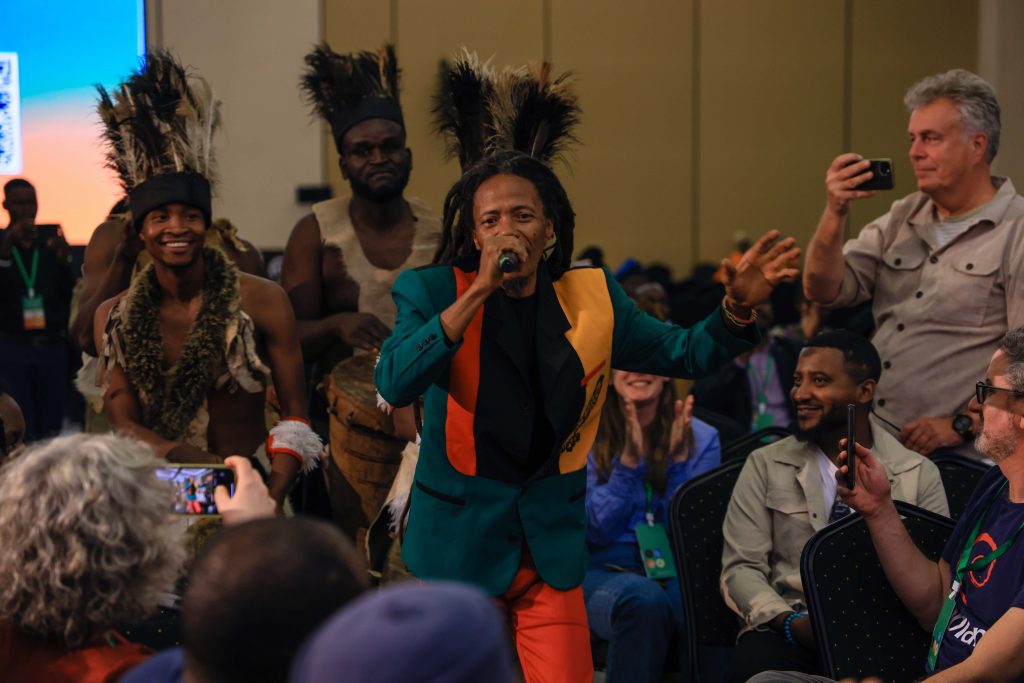
For the first time ever, the Digital Rights and Inclusion Forum (DRIF) theme song was performed live in Lusaka, Zambia, during both the opening and closing ceremonies of this year’s edition. The three-minute track is an upbeat roots reggae piece celebrating the benefits of modern technology, from artificial intelligence to the wider internet, and how these tools continue to shape our societies.
To bring this vision to life, DRIF turned to Maiko Zulu, the multi-award-winning Zambian reggae artist, producer, and outspoken human rights activist. Widely recognised as one of Zambia’s biggest reggae acts, Maiko carries a long legacy of using music as a vehicle for justice and social change. Some of his most popular songs include ‘Mad President,’ ‘In the Ghetto,’ and ‘Why must I vote again?’
In this conversation, Paradigm Initiative’s Communications Officer, Giyo Ndzi, catches Maiko away from the stage lights for a brief chat about his inspiration, the creative process behind the DRIF25 theme song, and how his activism continues to drive his art
Q: Let us start with the fun stuff. Who is Maiko when the mic is off?
Maiko is a hands-on person. I am a jack of all trades. A parent, grandparent, I don’t socialise so much, but I love to be hands-on. I am hands-on, and that is Maiko away from the mic.
Q: Your music has always carried strong messages. What inspired you to blend reggae with digital rights, and how did that fusion lead to the creation of the DRIF theme song?
Reggae music has always been associated with people’s freedoms in social, cultural, political, and emancipatory contexts. You know, in this era of digital rights, it is just right that we, as reggae musicians, champion the cause of people’s rights on cyberspace. When some of our comrades from Paradigm Initiative visited Zambia and saw some of the digital rights initiatives we were undertaking artistically, they asked me to consider creating a theme song for DRIF – the Digital Rights and Inclusion Forum. For me, I saw this as an opportunity to take the message forward to an even bigger stage. That is how we collaborated and came up with the theme song for DRIF 2025
Q: As an artist, how do you envision music influencing conversations about digital rights, inclusion, and free expression online, particularly among young people?
Music will always influence conversations about change in all spheres. Digital rights included. Music has no borders. Music has no language. You could be listening to a piece of music and be inspired. Music is a great catalyst for bridging borders, especially among our young people, who have taken over social media. Music will always be an integral part of conversations.
Q: Reggae is known for its roots in resistance and liberation. How does that spirit show up in your own activism, both offline and in the digital space?
The spirit of resistance and liberation in reggae music is the fire that burns within us. It is the fuel that drives us forward in our activism, both online and offline, and now at the centre of the quest for digital rights and digital freedoms for the people.
Q: Can you walk us through your creative process for the theme song? What emotions or experiences were you hoping listeners would feel the moment they hit play?
The creative process was quite exciting because I had to work with Kenneth, Adesuyi and Miriam online. It was exciting using the digital space and trying to get into each other’s emotions. For me it was quite challenging because I had to imagine an audience I had never seen before because I was informed that there would be people from so many countries across the globe and so it was quite a challenge but in the end we got it going and we had to interpret what Paradigm Initiative was thinking into something artistic and so we fused our local traditional dancers from four provinces of Zambia. It was quite exciting to work with a cultural group and fuse reggae.
Q: What’s a surprising fact about you that your fans might not know?
One surprising fact about me is that, although you see me with dreadlocks today, I was once an Altar boy in the Cathedral of the Holy Cross in Lusaka. Don’t tell anybody (smiles).
